
Services
Fiberglass Batt Insulation
Precision-cut fiberglass batts for walls, floors, ceilings and crawl spaces — fitted snug, never stuffed or compressed.
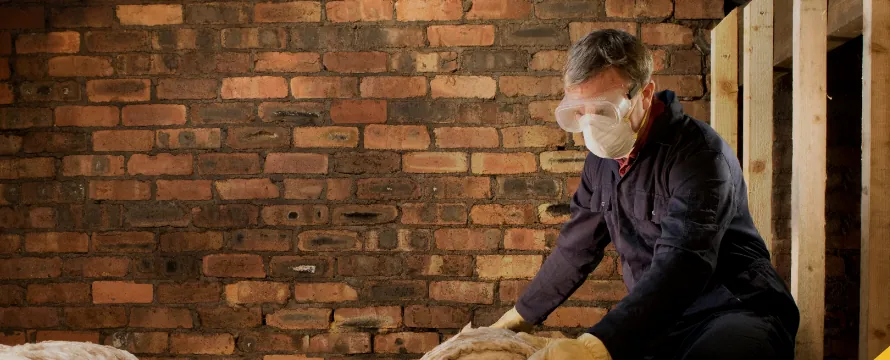
A batt only performs if it fits. Too loose and air circulates behind it; stuffed into a smaller cavity and the compression steals the very air pockets that make it insulate. Good batt work is patient work: every piece measured, cut to the cavity, split around wires and pipes, and seated flush — which is why batt installation rewards a careful crew and punishes a rushed one.
We install batts where they belong: open walls during renovation, basement ceilings, floors over crawl spaces, garage ceilings with rooms above, and attic floors where the layout suits them. Faced or unfaced, matched to the moisture picture of the space — and always paired with air sealing where the assembly needs it.
What's included
- Every batt cut to its cavity — no stuffing, no sagging, no gaps
- Split and fitted around wiring, plumbing and bracing
- Faced batts where a vapor retarder belongs; unfaced where it doesn't
- Floors over crawl spaces and garages secured against sagging
- Ideal companion to renovation and finishing projects
Book Your Free Assessment
Tell us what you need and we'll call you back to confirm. Rather talk now? (855) 640-0404 — answered 24/7.
How it works
Our Process
Measure the cavities
Stud spacing, depth and obstructions are mapped so material is ordered and cut for your framing, not generic bays.
Seal the leaks
Air leaks through the assembly are sealed first — batts slow heat flow, they don't stop air movement.
Fit & install
Batts are cut, split around services, and seated flush and full in every cavity.
Walk-through
You see the finished bays before they're closed up or we leave — fit is visible, and we want you to see it.
Questions
Fiberglass Batt Insulation — FAQs
Sometimes we do — in a simple, rectangular attic floor they work well. In chopped-up attics with lots of obstructions, blown-in usually achieves more consistent coverage. The assessment tells us which your attic suits.
A batt squeezed into a shallower cavity than it was made for loses insulating value — the air pockets crush. It's the most common batt mistake we find, and the fix is the right thickness for the cavity, installed at full loft.
Yes — batt insulation in the basement ceiling separates the conditioned floor above from the cooler space below, warming floors and quieting the house. It's a frequent pairing with crawl-space work.
It depends on the wall or floor assembly and which side is warm in winter. Faced batts carry a built-in retarder; where the assembly calls for a separate vapor barrier, we install one — your quote will say which and why.