
FAQ
Insulation Questions
Attics, air sealing, materials, crawl spaces, removal and booking — answered straight.
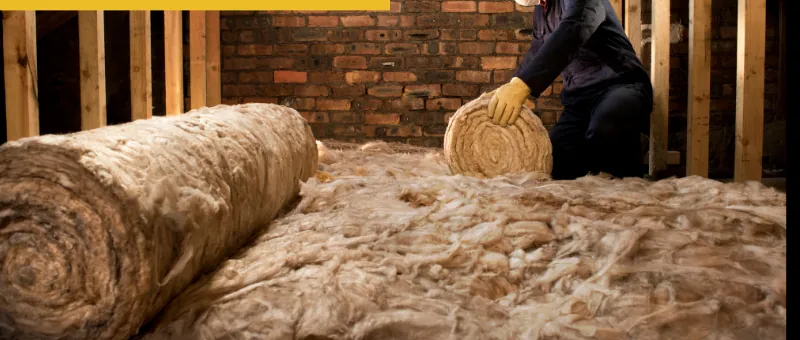
The symptoms are the tell: an upstairs that's hot all summer, rooms that never match the thermostat, floors that freeze over the crawl space, ice dams in winter, an HVAC system that rarely rests. The proof is simpler: a look in the attic. If the insulation sits at or below the tops of the joists, or you can see bare patches, your home is under-insulated by current standards. Our free assessment measures it and shows you in photos.
It depends on the area, the material and what's already there — which is why the assessment and the written quote come first, free, with no obligation. You'll see your options priced in writing before any work begins, and the price we quote is the price you pay.
The attic, almost always. Heat rises, the attic floor is the biggest single boundary in the house, and it's the most accessible — the best return per dollar lives up there. Walls matter, but they're a later, more involved project for most existing homes.
Because insulation doesn't stop moving air. Heated air escaping through gaps around pipes, wires, lights and the hatch carries its heat with it no matter how deep the insulation is. Sealing first is what lets new insulation perform at its rated value — skipping it is the most common reason insulation jobs disappoint.
Most attic jobs — sealing included — finish in a day. Crawl-space systems, removal projects and spray-foam assemblies can take longer; your written quote includes a realistic schedule.
We serve 373 communities across Maryland, Washington DC and Northern Virginia from our Beltsville base — check your ZIP in the finder above or browse the full service-area list.
It depends on what's already there and how your home behaves. Current guidance for our climate zone calls for substantially more than most older homes were built with — which is exactly why the assessment comes first: we measure your existing depth and recommend from evidence, not a table.
Usually, yes — sound, dry existing insulation can stay and be topped up. If it's wet, compressed flat, contaminated or hiding problems, we'll show you why removal is the honest call before anything new goes in.
Loose fill settles somewhat after installation — that's expected physics, and it's why we install to a settled-depth target, not the fluffed depth on day one. Properly installed, it then stays put for decades.
Both insulate well when installed to the right depth. Fiberglass resists moisture and doesn't settle as much; cellulose is a recycled product with excellent air-flow resistance. We'll lay out the honest trade-offs for your attic at the assessment.
Sometimes we do — in a simple, rectangular attic floor they work well. In chopped-up attics with lots of obstructions, blown-in usually achieves more consistent coverage. The assessment tells us which your attic suits.
A batt squeezed into a shallower cavity than it was made for loses insulating value — the air pockets crush. It's the most common batt mistake we find, and the fix is the right thickness for the cavity, installed at full loft.
In the right places, yes — rim joists, roof decks and leaky crawl spaces repay it because it seals air leaks that fiberglass can't. In a wide-open attic floor, usually not. Your assessment will show you the comparison for your house, in writing.
We ask that the work area be vacated during application and for a curing window afterward, and we'll give you the exact re-entry timing for the product used before the job starts.
A house needs controlled ventilation, and simply sealing leaks in an existing home essentially never overshoots — the leaks in a typical house add up to a wide-open window. If your home has combustion appliances, we work with the care they require and flag anything that needs a professional look.
Because the two do different jobs. Insulation over open leaks still lets your heated air pour out — it's like wearing a sweater in the wind without a jacket. Sealing first is what lets insulation hit its rated performance.
Both designs exist in our region. Insulating the ceiling keeps the crawl outside the conditioned space; insulating the walls (with a sealed vapor barrier) brings it in — often better where ducts and pipes live below. We assess your layout and explain which suits it.
Very likely — a floor over a vented, uninsulated crawl space is a floor over outdoor air. Insulating below it (plus sealing the rim joists) is the direct remedy, and homeowners usually feel it the first cold week.
No — they fight different battles. Insulation resists conducted heat; the barrier reflects radiant heat. The barrier is an addition to a properly sealed, properly insulated attic, never a replacement for one.
In a sun-baked attic with ducts or an upstairs that overheats, the attic itself runs noticeably cooler, which eases everything below it. In a shaded, well-insulated attic, the gain is smaller — the assessment will tell you which house you have.
Dry, clean, merely thin insulation gets topped up. Wet, moldy, pest-contaminated, urine-soaked or smoke-damaged insulation gets removed. If you're not sure which you have, the free assessment settles it — with photos, not opinions.
The system is sealed from attic to truck: insulation travels through the vacuum hose into bags outside. We protect floors and furnishings along the access route and treat pest-contaminated material with appropriate care and protective equipment.
Book Your Free Assessment
Tell us what you need and we'll call you back to confirm. Rather talk now? (855) 640-0404 — answered 24/7.