
Blog · 2026-11-12
Insulate First or Air Seal First? Why the Order Matters More Than the Material
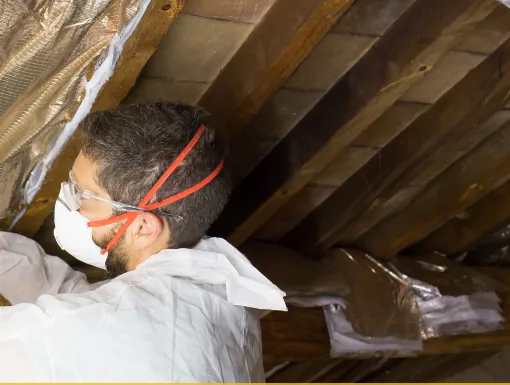
Homeowners shopping for insulation usually compare materials: fiberglass or cellulose, batts or blown-in, this R-value or that. Almost nobody asks about order of operations — and it's the question that decides whether the job works. Insulation and air sealing do different jobs. Insulation slows heat moving through a surface. Air sealing stops heat carried by moving air. A home needs both, and the sealing has to happen first, because once insulation covers the attic floor, the leaks underneath it are buried for good.
The stack effect runs your house
Warm air rises. In winter, the air you've heated collects at your ceilings and pushes out through every gap it can find — around the attic hatch, along the top plates of your walls, past pipes, wires and light fixtures. That escaping air pulls cold outdoor air in through the bottom of the house: basement rim joists, crawl-space gaps, lower penetrations. It's called the stack effect, it's driven by the temperature difference itself, and it means your home is quietly exchanging its heated air for cold air all winter long. In summer it reverses, pulling hot attic air down into the living space.
Reading the fingerprints
Leaks leave evidence. In the attic, look for insulation that's darker in streaks and patches — that's dust deposited by years of air moving through it, a fingerprint of the leak below. Around a home, the signs are drafts at outlets on outside walls, a chilly halo around the attic hatch, and rooms that never match the thermostat. Our air sealing crews read those signs the way a mechanic listens to an engine: the pattern tells you where the air is going.
What sealing actually involves
It's unglamorous, physical work: capping open wall tops and dropped soffits, foaming every pipe and wire penetration, weather-stripping and insulating the hatch, sealing the chimney chase with materials rated for the heat, and closing up the rim joists from the basement side. None of it shows in a photograph as beautifully as a fresh blanket of insulation — and all of it is why the fresh blanket performs. When sealing and insulating are done together, as in our attic insulation process, the two multiply: the boundary stops leaking, and the material above it can finally do its rated job.
The one exception to 'seal first'
If your existing insulation is wet, contaminated or damaged, it may need to come out before anything else happens — that's the removal and replacement path, and even then, sealing happens on the bare floor before new material goes down. The order never really changes: clean, seal, insulate. Any quote you receive that skips the middle step is a quote for a job that will underperform quietly for decades.
Want to know where your house leaks? A free assessment maps the major ones with photos. Call (855) 640-0404.
Want us to look at your attic?
Book a free assessment — depth measured, leaks photographed, options in writing.